
Self-Hosted
AI tools that can be deployed and run on your own servers or private infrastructure, giving full control over data and security.
37 tools, updated November 2026
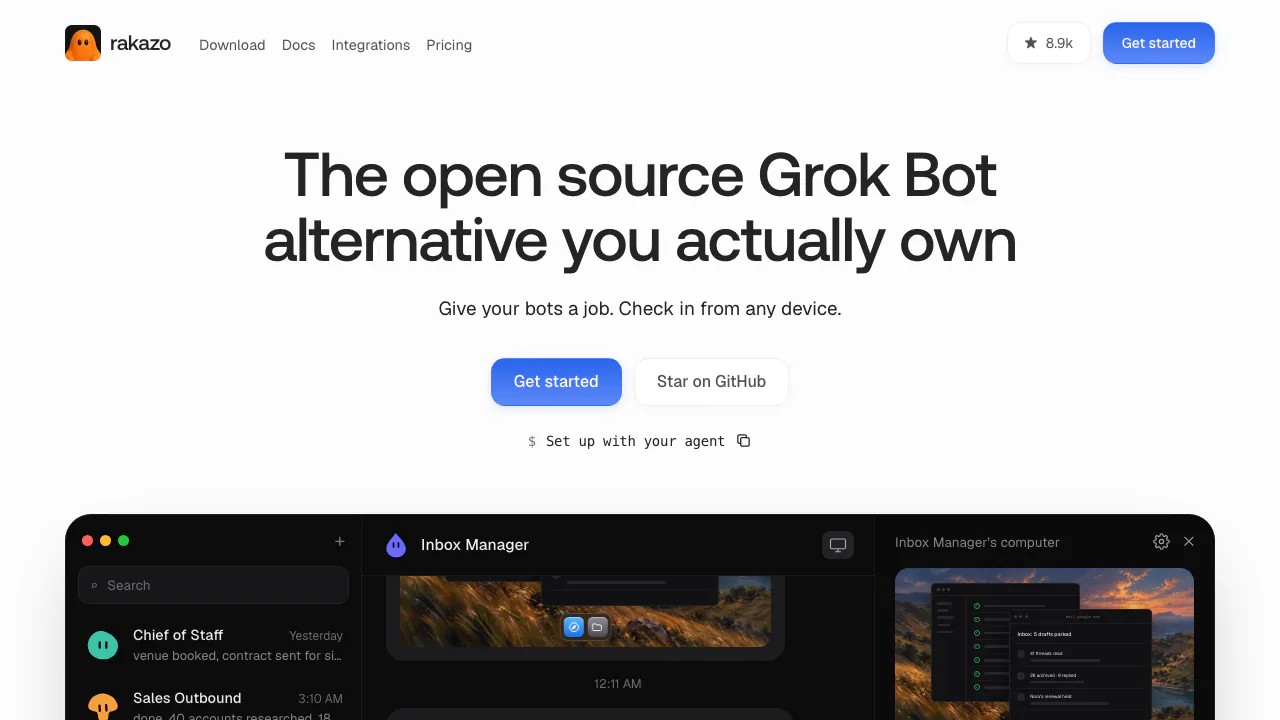

Rakazo
NEWPersistent AI bots with app connections, memory, computers and scheduled routines
AI Automation ToolsFreemium

Antelog
Check agent actions before execution and trace what happened.
AI Coding & Developer ToolsFreemium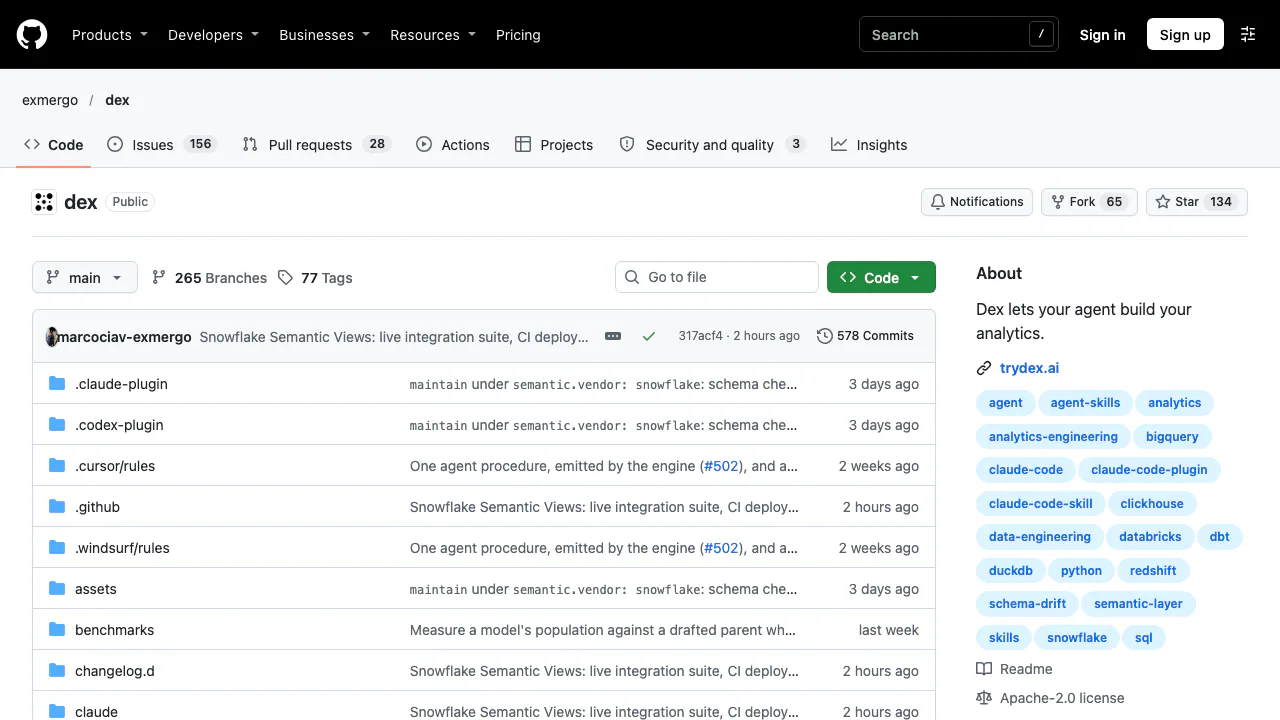

Dex
Give your coding agent a repeatable way to explore data, build dbt models and maintain metrics.
AI Coding & Developer ToolsFree

Sendoff
Draft and send newsletters from Claude or Codex on your own cloud accounts.
AI Marketing & Sales ToolsPaid
Hexmos
Review Git changes where they happen, from your terminal to your team's pull requests.
AI Coding & Developer ToolsFreemium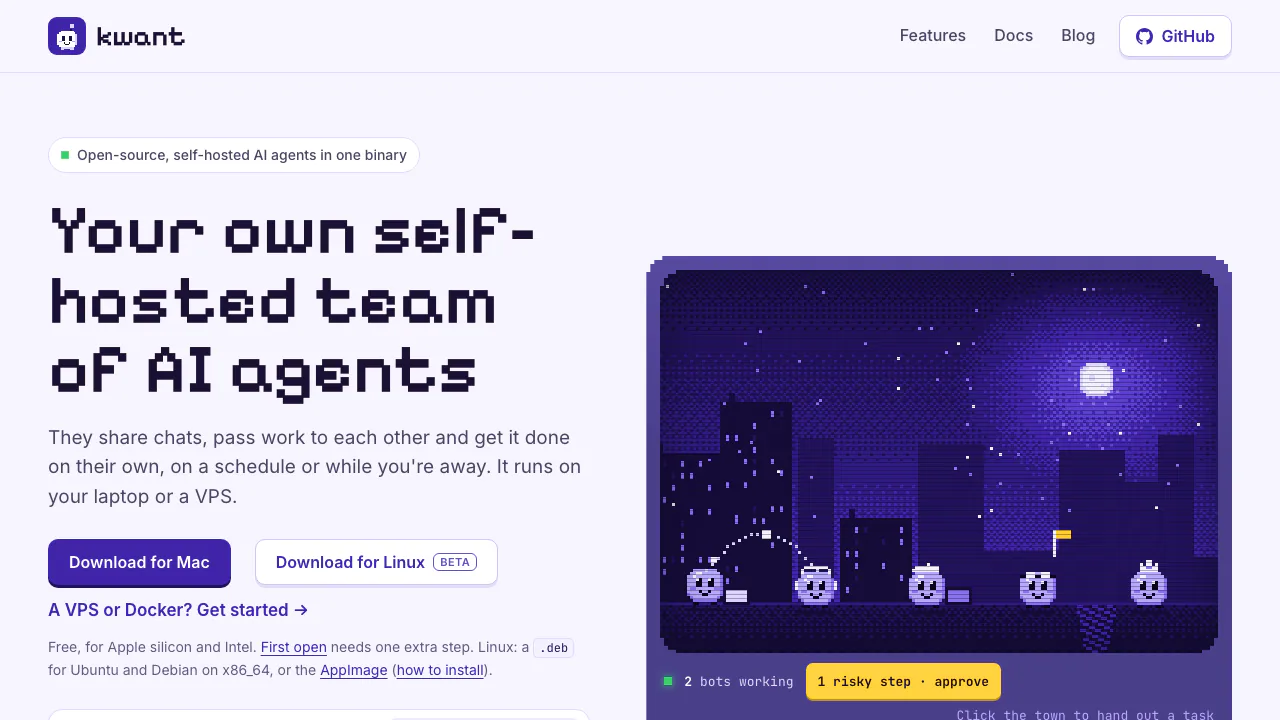

kwant
Run your own AI team with handoffs, schedules and approvals.
AI Automation ToolsFree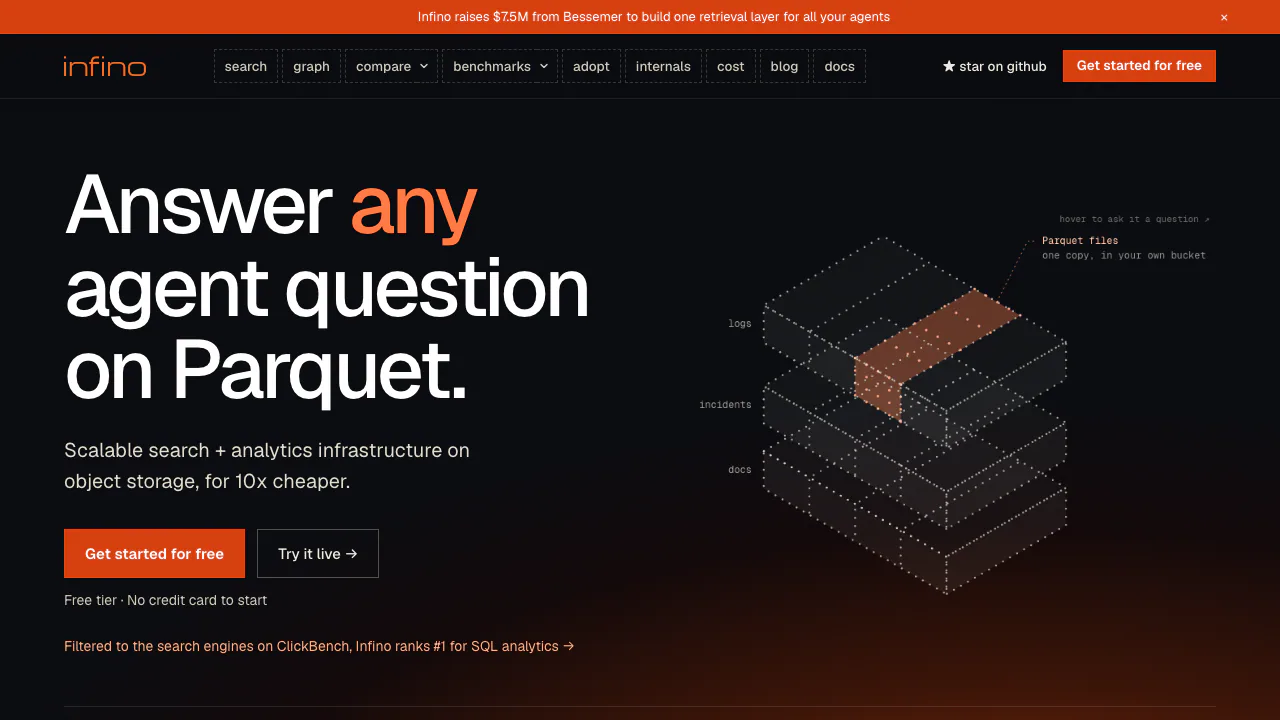

Infino
Open-source retrieval over Parquet, combining keywords, vectors and SQL for AI applications.
AI Databases & Context InfrastructureFreemium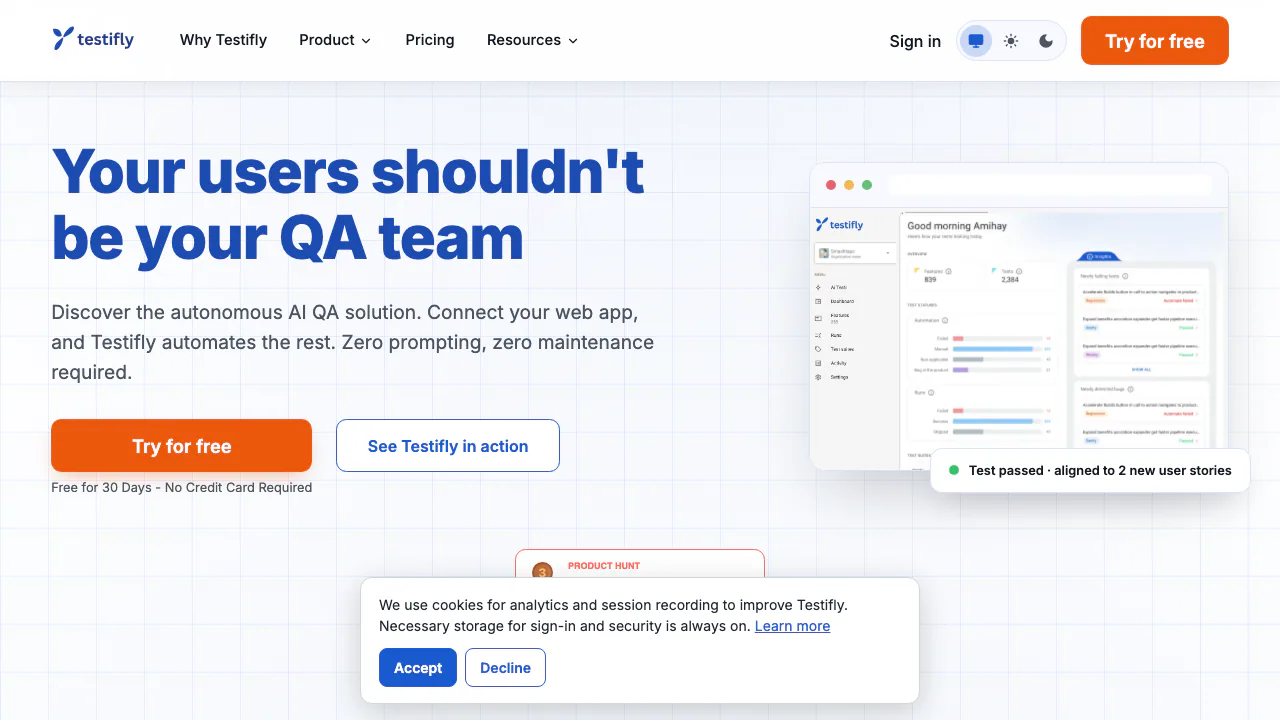
Testifly
Discover web-app flows, generate tests and investigate regressions with AI.
AI Coding & Developer ToolsPaid

Scalekit
Connect agents to user accounts with managed OAuth, scoped tools and attributable execution logs.
AI Automation ToolsFreemium

NIN
Local chat, voice typing and approved tools in NINX, with optional app connections.
AI Assistants & ChatbotsFreemium

Paddock
Linux computers and controlled sandboxes for coding agents on your own VPS.
AI Coding & Developer ToolsFree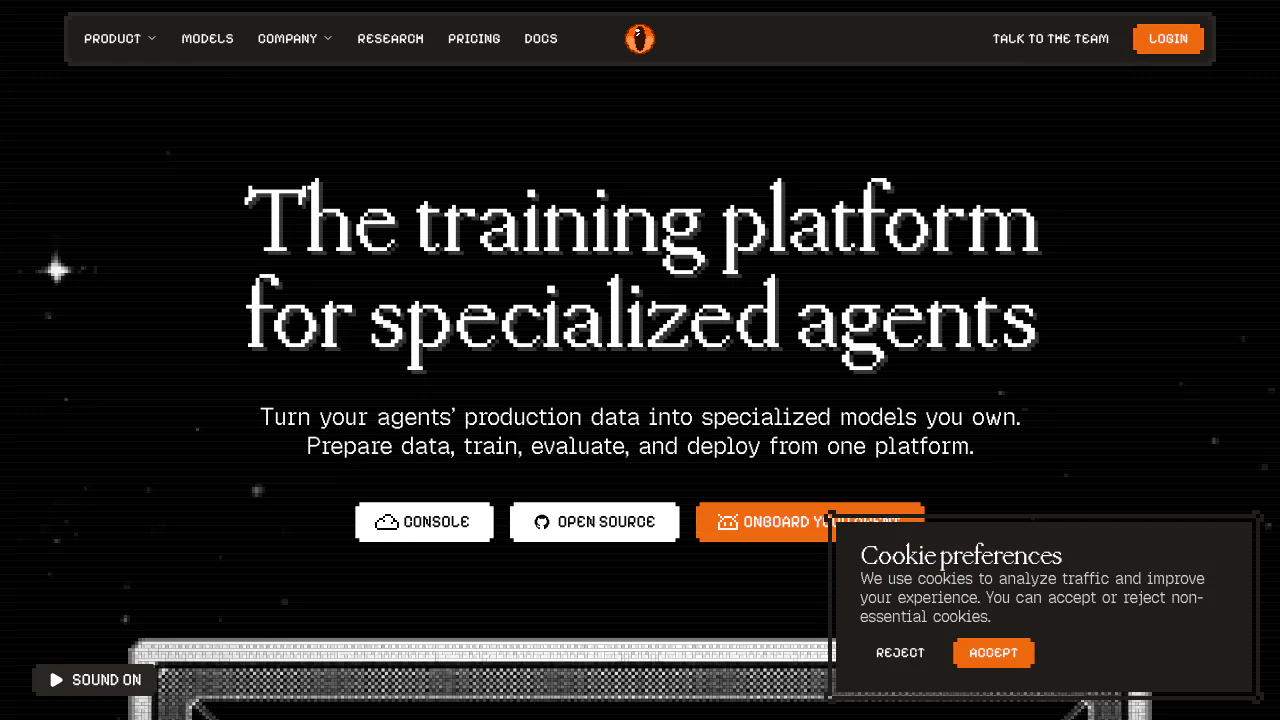

Overmind
Prepare agent data, fine-tune models and measure the result.
AI Model APIs & InfrastructureFreemium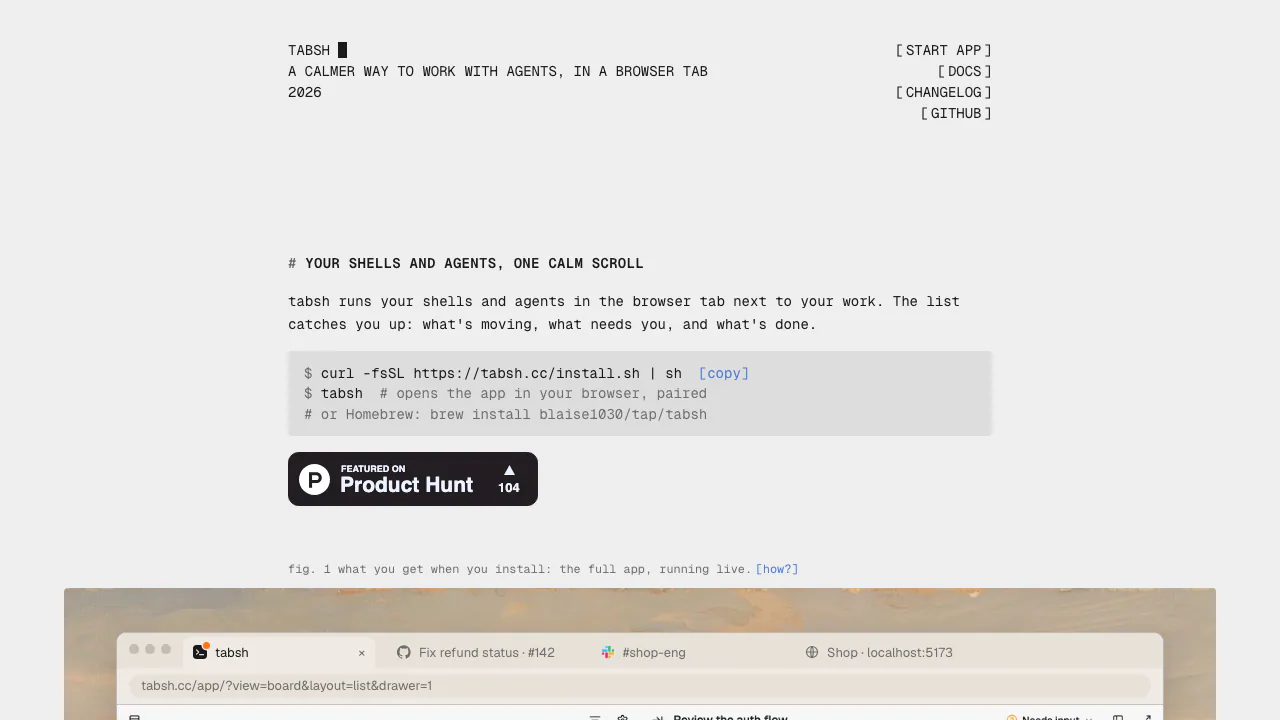
tabsh
Keep local shells, coding agents and project status together in your browser
AI Coding & Developer ToolsFree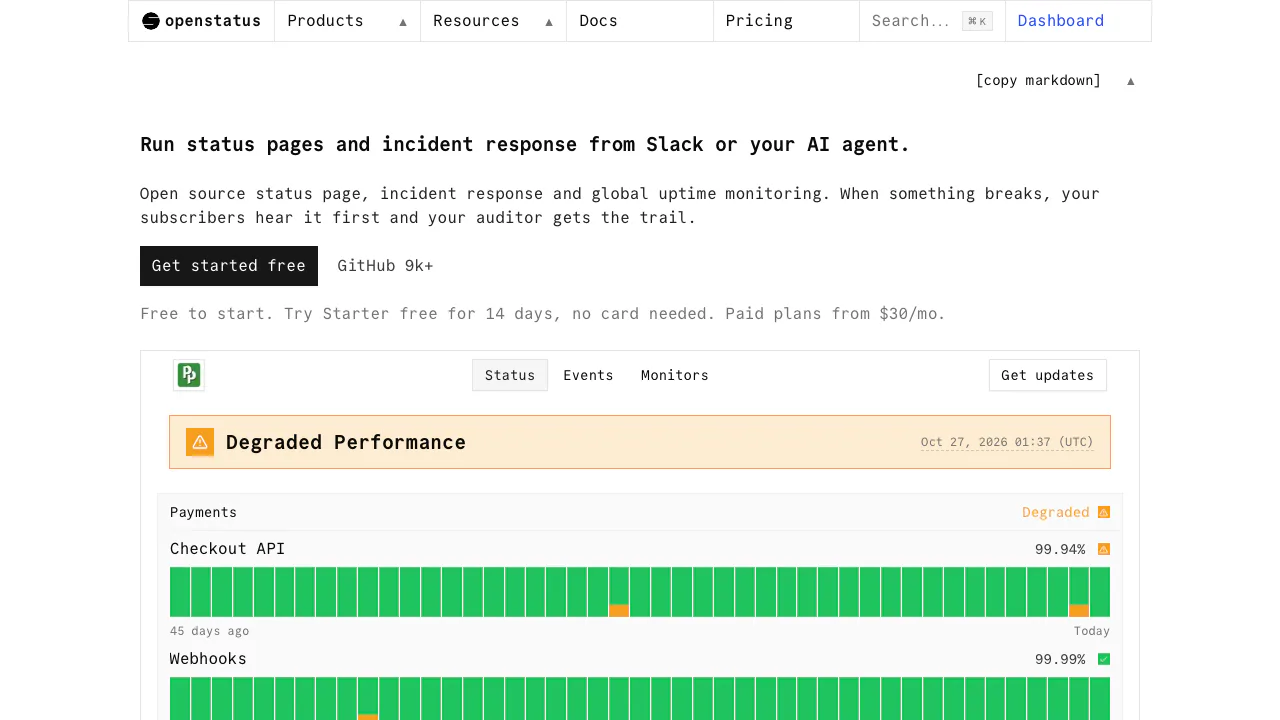

OpenStatus
Open-source monitoring, status pages and reviewed AI incident workflows
AI Operations & Incident ResponseFreemium

Papermark
Share confidential files, track readership and review documents with AI.
AI Productivity & Document ToolsFreemium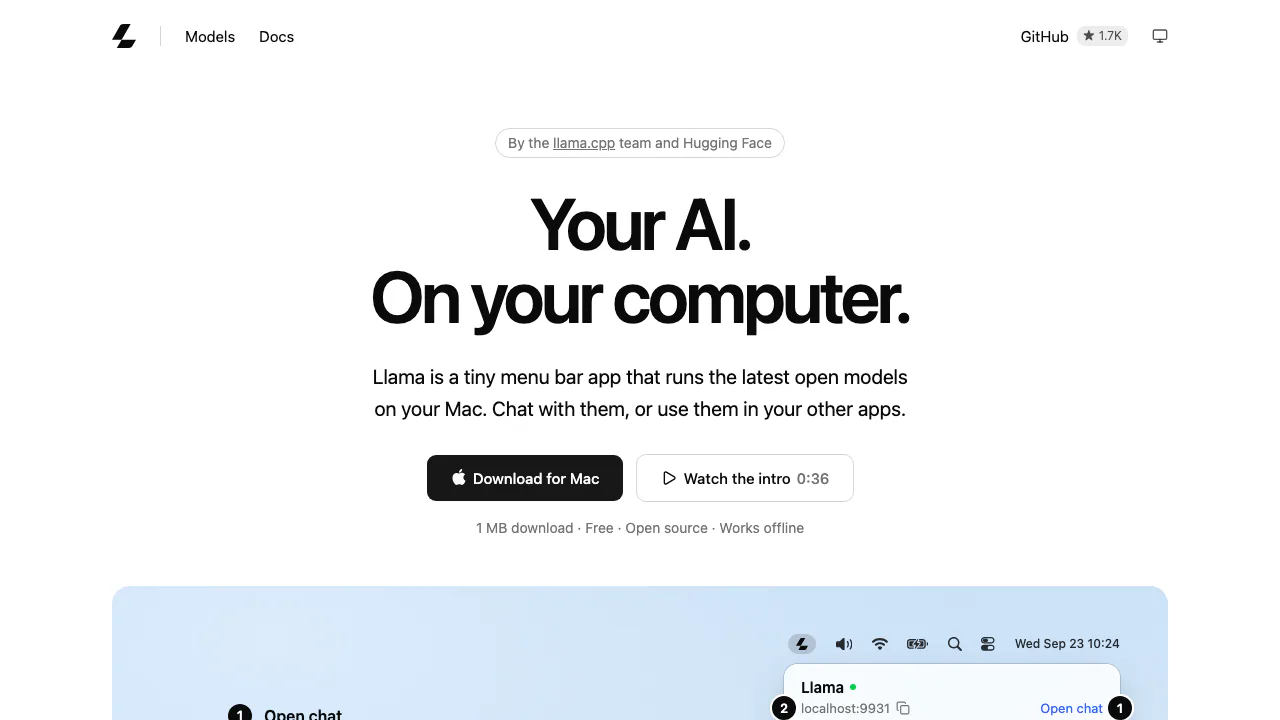

Llama
Run open models on your computer, chat with files, and connect your apps to a local API.
AI Model APIs & InfrastructureFree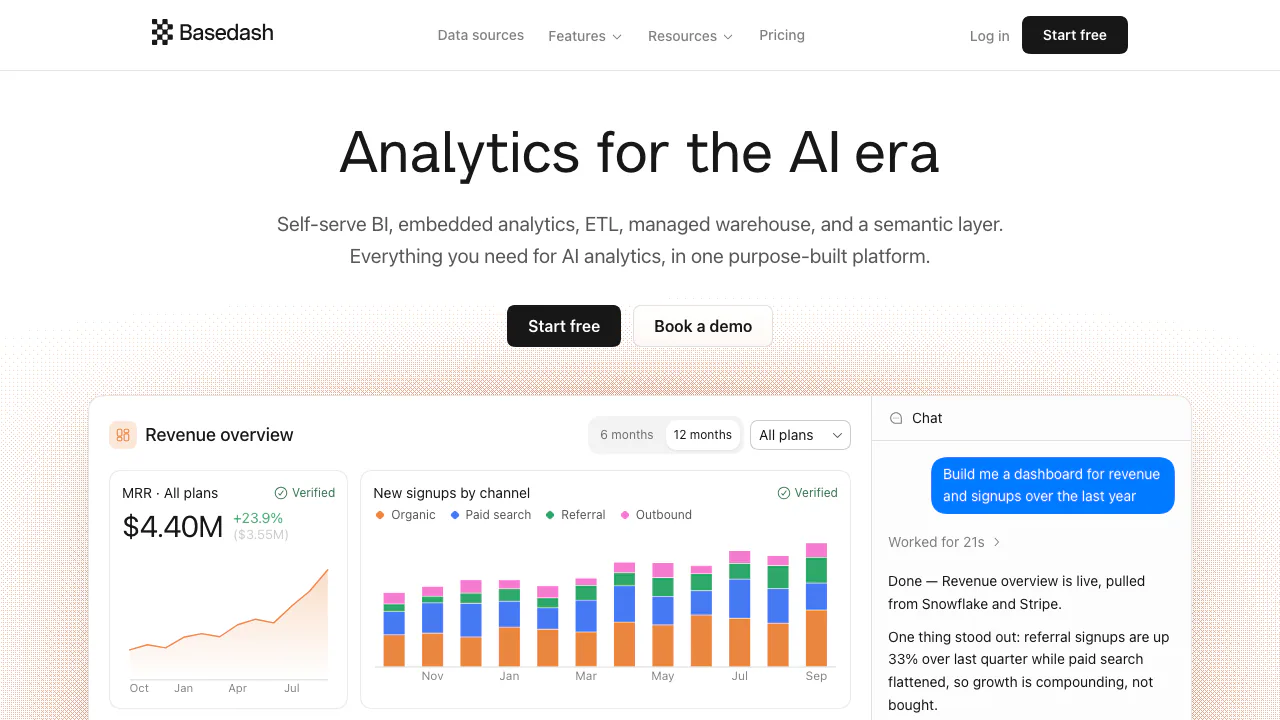

Basedash
Ask business questions, check the SQL and build live dashboards from connected data.
AI Business Intelligence & AnalyticsPaid

Reflection
Build with Beam through an API, Mirror CLI, or your own infrastructure.
AI Model APIs & InfrastructureFree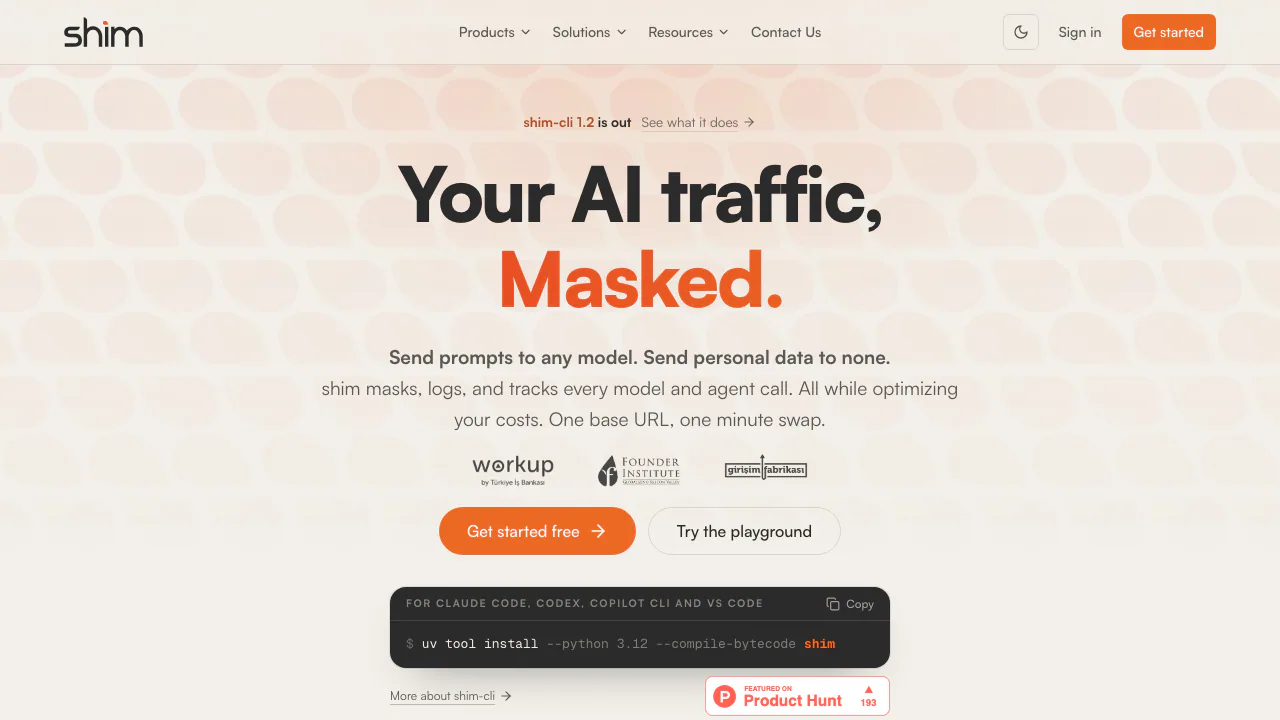

shim
Mask sensitive AI traffic, track spending and inspect coding-agent exposure.
AI Model APIs & InfrastructureFreemium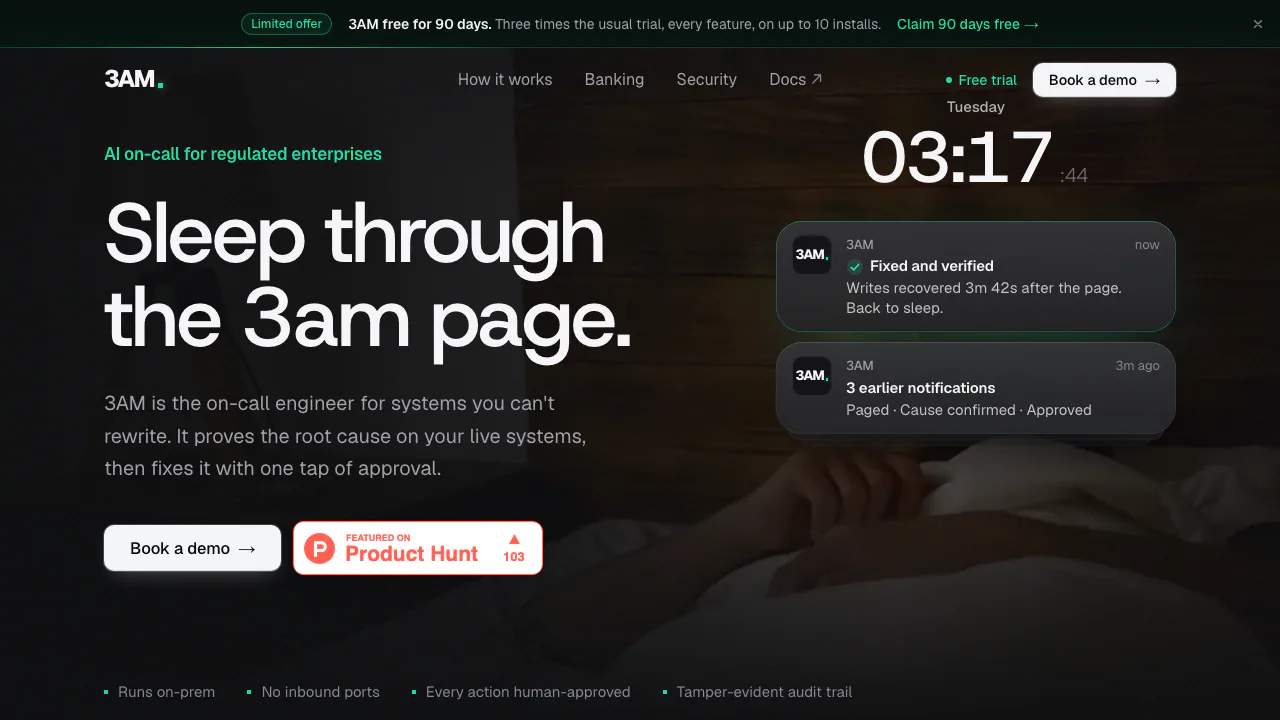
3AM
Investigate production incidents, verify causes and repair within your team's approval policy.
AI Operations & Incident ResponseContact for pricing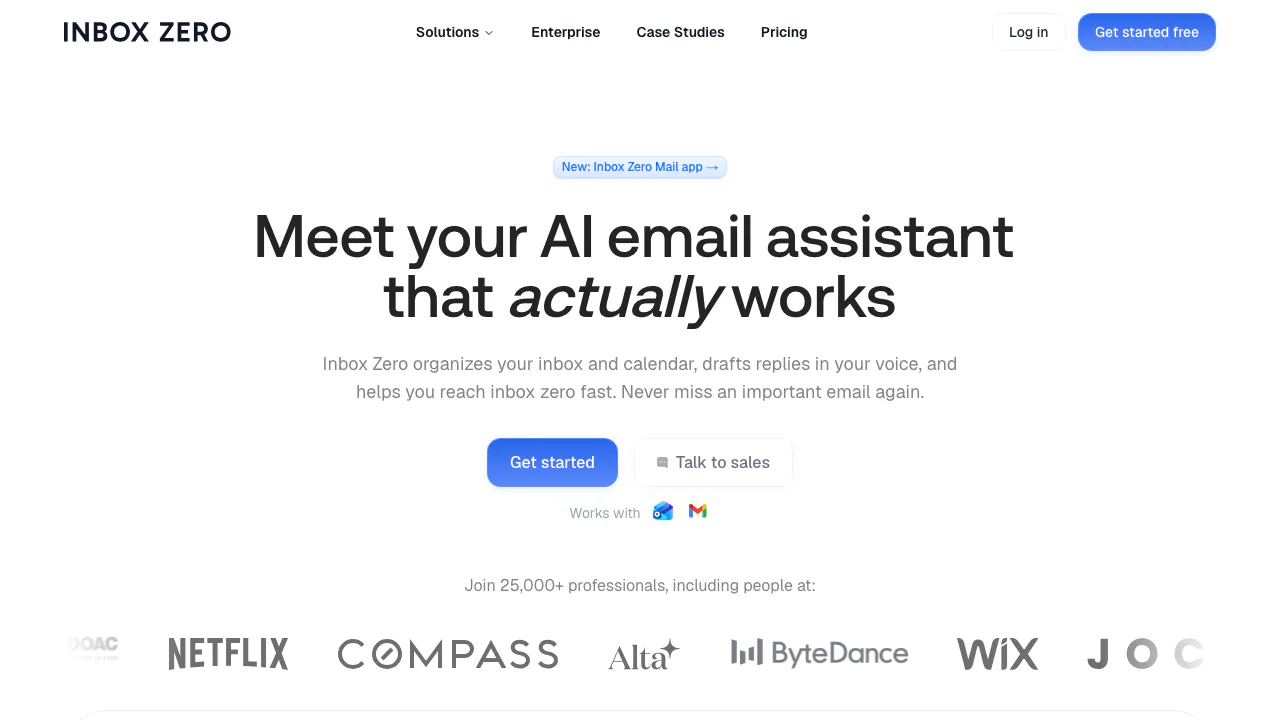

Inbox Zero
Sort incoming mail, prepare replies and clear subscriptions with an AI assistant.
AI Productivity & Document ToolsFreemium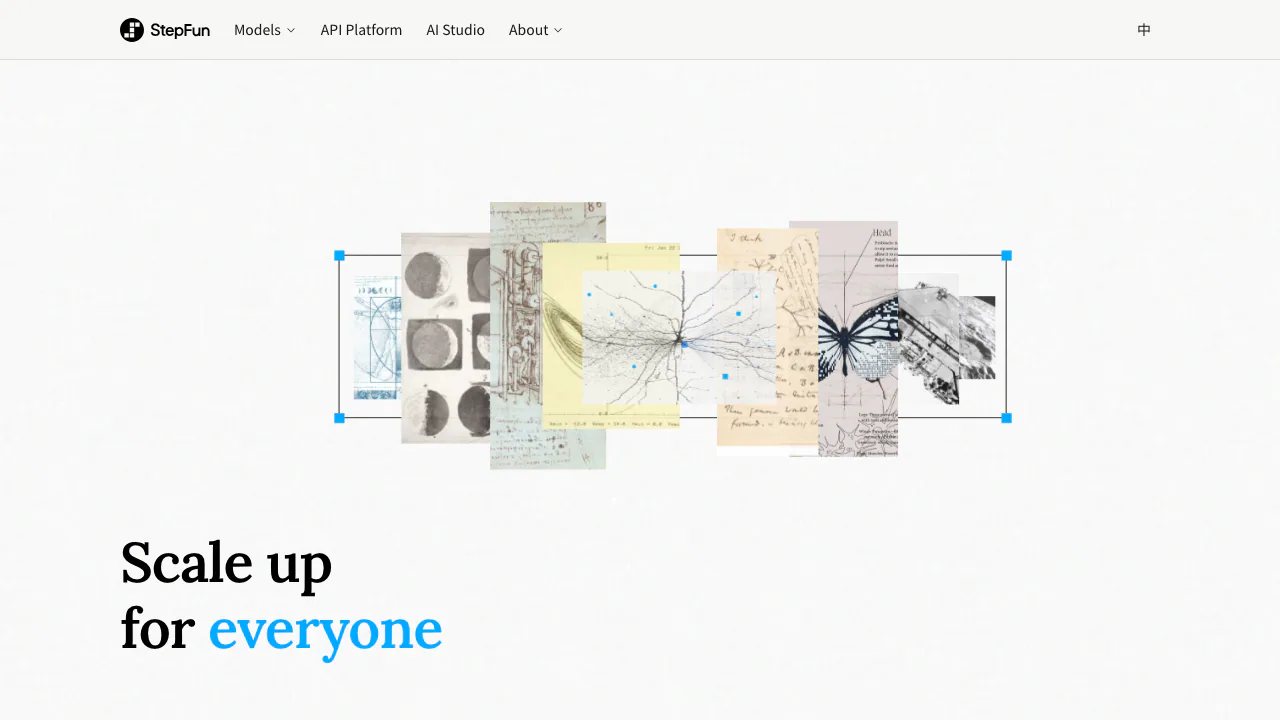

StepFun
Explore StepFun models in AI Studio or integrate coding, multimodal and voice capabilities through an API.
AI Model APIs & InfrastructurePaid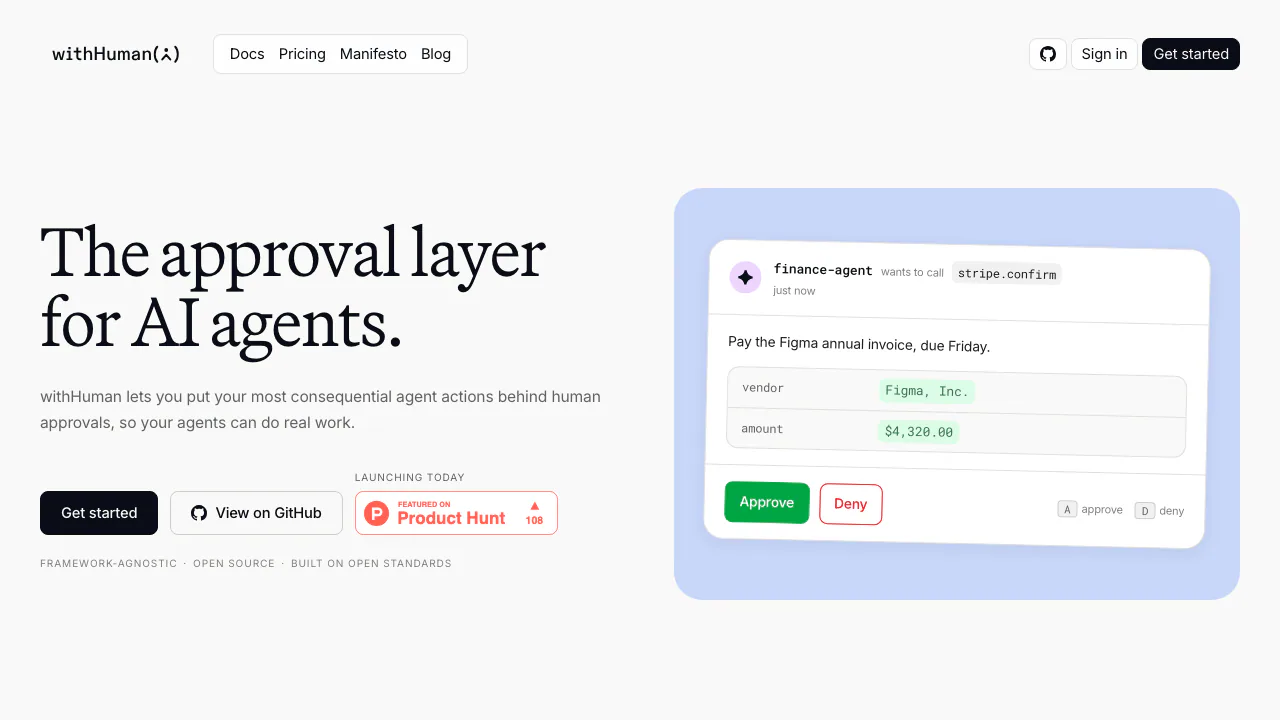

withHuman
Check agent tool calls against policy and route consequential actions to a human before execution.
AI Automation ToolsFreemium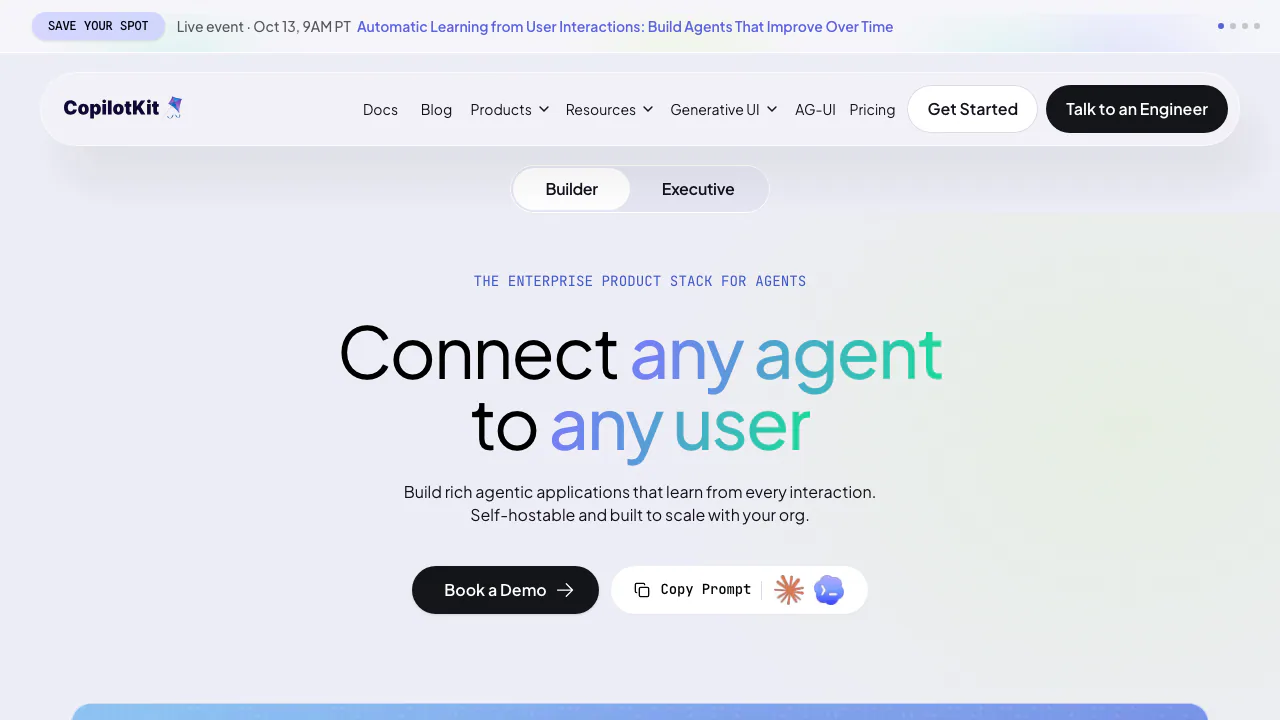

CopilotKit
Connect your application's interface to AI agents, tools and human decisions with an open-source SDK.
AI Chatbot BuildersFreemium
What does self-hosted mean for AI tools?
Self-hosted AI tools run on infrastructure you control: a laptop, a private VM, a Kubernetes cluster in your VPC, or a rack in your own data center. The software may be open source or commercially licensed. The defining trait is that prompts, documents, embeddings, conversation logs, and credentials stay inside your boundary instead of a vendor-operated SaaS tenancy.
Self-hosting is not automatically more secure. It shifts operational work to your team: upgrades, backups, TLS, identity, secrets, capacity planning, and incident response. Choose it when data residency, network isolation, or customer contracts require it — not because on-prem sounds safer by default.
Why teams self-host AI software
Data residency. Keep retrieval corpora and interaction logs in a chosen region or on-premises when a public SaaS region list is not enough for contracts or regulators.
Network isolation. Some environments cannot call a public model API. A self-hosted stack can run fully offline or only through a private gateway you approve.
Customization. Change authentication, retention, model routing, and integrations without waiting on a vendor roadmap or a shared multi-tenant release train.
Cost at scale. After you already operate Kubernetes or GPU capacity, per-seat SaaS pricing can exceed the cost of running the same control plane yourself.
What you still have to operate
You own patching, storage growth from logs, GPU or CPU headroom, observability, and who can approve destructive actions. If nobody on the team can roll back a container weekly, a managed product is the safer choice even when the license is free.
Treat generated agent actions the same way you treat production deploys: version control, review, backups, and an explicit owner for secrets and model endpoints.
Common deployment shapes
- Single VM or Docker Compose — small team, proof of concept, or an internal lab.
- Kubernetes — production replicas, health checks, and rolling updates.
- Cloud VPC (AWS, GCP, Azure) — elasticity without handing conversation data to a multi-tenant SaaS control plane.
- Air-gapped on-premises — no outbound internet. Confirm the installer, license check, and crash reporter do not phone home.
Ask whether the project publishes Compose files, Helm charts, or Terraform, and which data leaves the cluster for license checks, embeddings, or telemetry.
How to evaluate a self-hosted AI tool
- Data path — Do traces, embeddings, or license pings leave your network?
- Identity — SSO, role-based access, audit logs, and secret storage.
- Upgrades — schema migrations, breaking changes, and rollback.
- Resources — RAM, disk for logs, and GPU if local models run beside the control plane.
- License — Apache 2.0 versus AGPL versus a paid self-host SKU.
- Support — community only versus a commercial contract with response times.
Self-hosted vs SaaS vs hybrid
SaaS is faster to start and cheaper to operate for a small team. Hybrid keeps sensitive logs private while using a managed control plane. Fully self-hosted is the default when legal, security, or customer contracts forbid third-party processing of conversations.
Frequently asked questions
Is self-hosted the same as open source?
No. You can self-host proprietary software with a license key. Some open-source tools are only practical as hosted cloud products.
Does self-hosting make us GDPR or HIPAA compliant?
No. You still need access control, retention, a processing record, and — for HIPAA — a covered-entity program. Self-hosting removes a vendor subprocessors line; it does not finish compliance.
What hardware do we need?
A logging and learning control plane may run on a small VM. Local LLMs need GPUs. Read the official hardware notes before buying capacity.
Who should not self-host?
Teams without on-call coverage, backup tests, or a patch cadence. In those cases a reputable SaaS with a data processing agreement is usually lower risk than an unmaintained internal cluster.