

PostizPaid
Plan, adapt and publish social content from one calendar, with AI assistance and a self-hosted option.
Articos AI User Research and Synthetic Interviews
AI-powered synthetic user research for faster interviews, message tests, and concept decisions.
What is Articos in plain language?
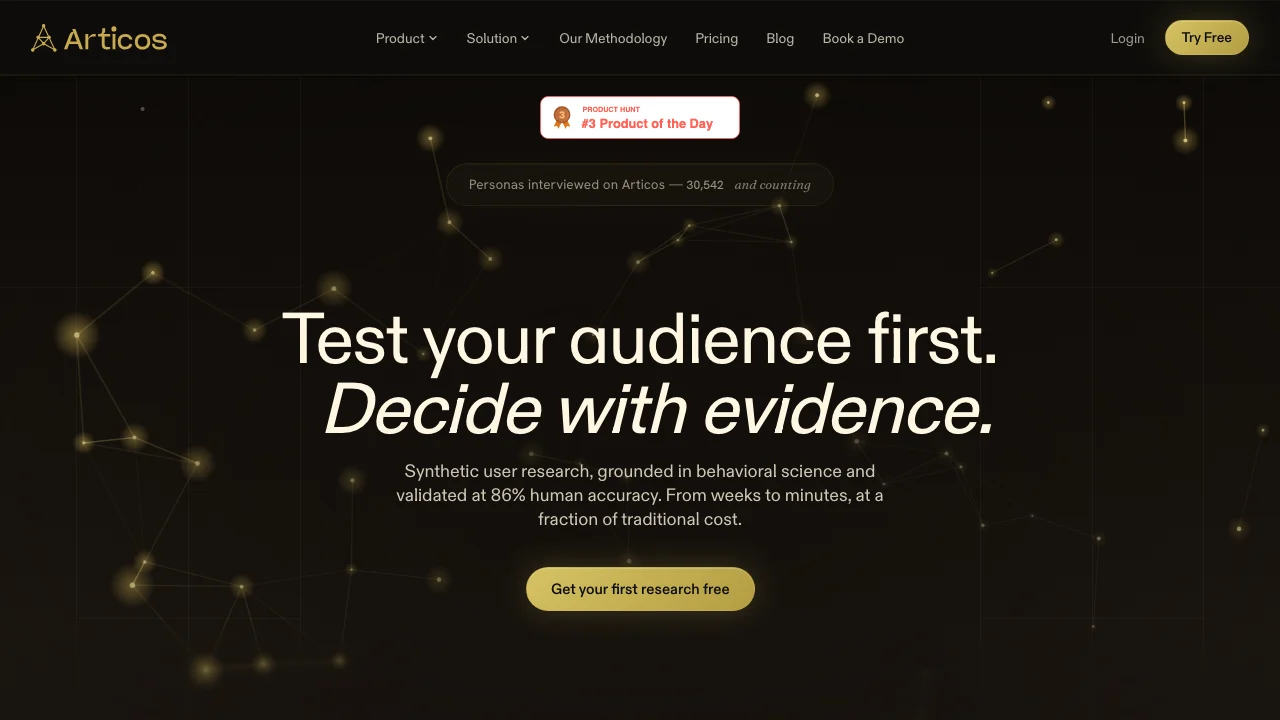
Articos is an AI user research platform that lets a team describe an audience and research question, then runs simulated interviews with synthetic personas. In everyday terms, it helps product, UX, marketing, and consulting teams pressure-test an idea before spending time recruiting real participants. It is designed for fast directional feedback, not as proof of how actual customers will behave.
Core research capabilities
The platform supports synthetic user interviews, messaging tests, and comparative A/B-style studies. Teams can explore needs and objections, compare headlines or value propositions, and review two page or design variants from URLs or screenshots. Messaging studies can compare up to three variants, while interview panels can include as many as 50 behaviorally varied personas.
How the workflow works
You begin with a research goal and audience. Articos builds a panel, interviews each persona in isolation, and generates a structured report. Its methodology page says the system uses behavioral frameworks, stance diversity, context isolation, evidence chains, and adversarial review to reduce shallow agreement. The report can highlight themes, motivations, objections, confusing language, segment differences, and prioritized recommendations.
Reports and evidence
Results are intended to be reviewable rather than just a single AI summary. Depending on the study, outputs may include persona quotations, confidence indicators, supporting evidence, web validation, a winning message or variant, and a shareable PDF. Articos reports its own 86% recall in a validation exercise across 46 studies; this is a first-party benchmark, not an independent certification.
Best use cases and important limits
Articos is useful for early discovery, interview-guide preparation, positioning work, concept screening, and deciding which hypotheses deserve real-world testing. Synthetic personas cannot confirm accessibility, purchase behavior, cultural nuance, regulated claims, or the experience of real users. For high-stakes decisions, combine the output with interviews, usability tests, analytics, or experiments involving actual people.
Pricing and privacy notes
The official pricing page displays Starter and Pro subscriptions, a free trial, and a one-time two-research pack. Trial wording differs between sections, so check the current checkout terms. The privacy policy says the service may process submitted URLs and page content, usage data, analytics, and session replay. Avoid uploading sensitive personal data unless you have a lawful basis and the current terms meet your organization’s requirements.
Frequently asked questions
Does Articos interview real people?
No. Its primary workflow uses AI-generated synthetic personas. Use the findings as directional research and validate critical conclusions with real participants.
What can I test?
You can investigate research questions, interview an audience model, compare marketing messages, and evaluate two page or design variants.
How quickly are results available?
Articos says many studies finish in under 30 minutes, although timing can vary by study.
Does Articos replace a UX researcher?
No. It accelerates exploration and synthesis, while researchers still need to frame questions, assess evidence, manage ethics, and choose when real-user research is required.
Related tools
AI User Research & Testing Tools →
Fotor Video AgentFreemium
Chat your way from a rough idea or source file to an editable video project.
Copy.aiPaid
AI go-to-market platform for marketing content, sales research, chat, integrations and repeatable workflows.
Jasper AIPaid
AI marketing platform for brand voice, campaign workflows, agents, content production and team governance.
TypelessFreemium
Speak a draft and turn it into editable writing
Give your existing AI agent product answers and contextual walkthroughs.