

scitePaid
See how scientific papers are supported, contrasted or mentioned
Consensus AI Academic Search: Features, Pricing and Limits
Search peer-reviewed research in natural language and inspect cited evidence before using a conclusion.
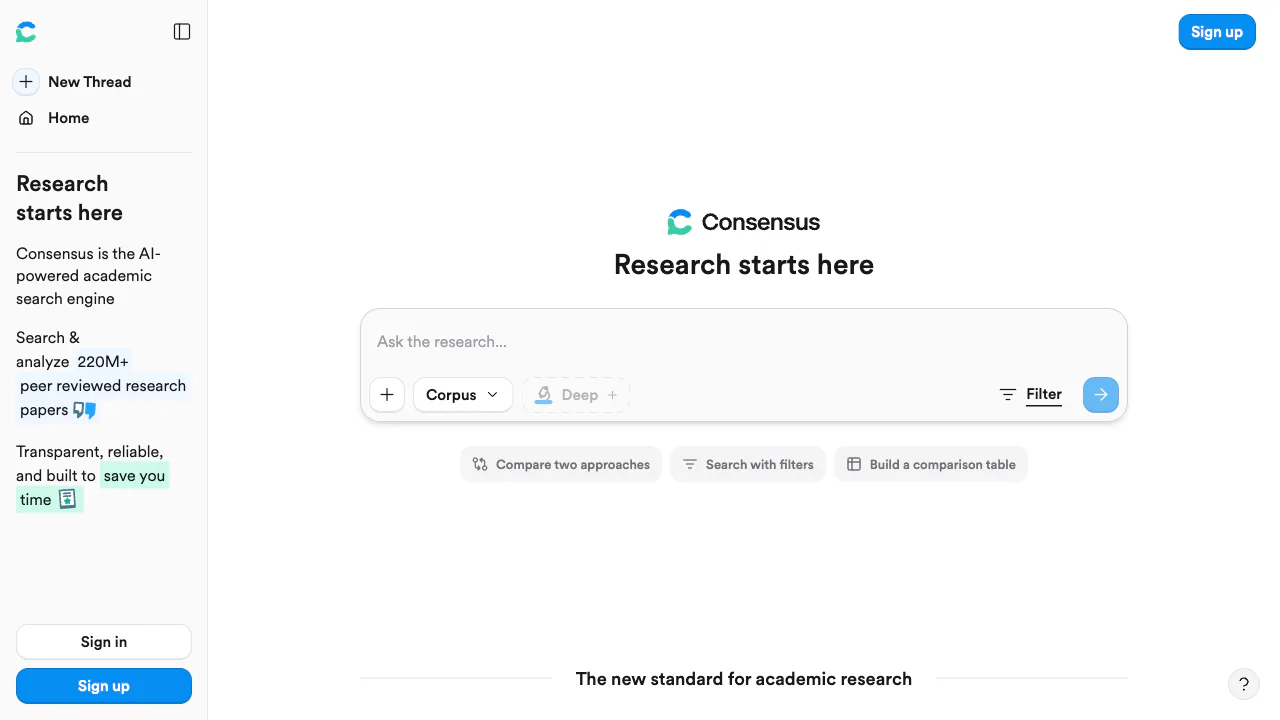
Consensus is an AI academic search engine that answers natural-language questions with evidence from peer-reviewed research. It helps students, researchers and professionals get an initial view of what published studies say while keeping links to the underlying papers. The product is better suited to evidence discovery and orientation than to unquestioned final answers.
Search and verify evidence in Consensus
Ask a narrow question that names the population, intervention or exposure and outcome. Review the paper cards, publication dates, study designs and source links instead of reading only the generated synthesis. Filters can narrow a broad set, while paper-level tools help explain a selected study. The official guide to how Consensus works describes the current search and analysis process.
For an important decision, build a small evidence table with study type, sample, measured outcome, direction of effect and key caveats. Open each source and confirm that the answer matches the paper. Separate randomized trials from observational studies, reviews and animal or laboratory work. A citation proves that a paper exists; it does not prove that the system interpreted it completely, that the study is high quality or that its result applies to another population.
Plans, security and coverage limits
Consensus has a free plan and paid subscriptions that expand searches or advanced analysis. Allowances and included tools can change, so verify the official subscription page before paying.
The company's security overview says user data is not used to train its models and explains query logging and organizational controls. Even so, avoid unnecessary personal, confidential or unpublished information until your own requirements are met. Consensus also states that its database is not exhaustive and that AI may misread papers. Systematic reviews and high-stakes decisions therefore need broader searching, full-text checks and expert judgment.
Is Consensus AI free?
A free plan is available with limits. Paid tiers provide larger allowances or additional tools; consult the live plan page for current details.
Can Consensus replace PubMed or a systematic review search?
No. It is useful for discovery and orientation, but comprehensive work should search relevant specialist databases, document the method and verify full papers.
Related tools
AI Productivity & Document Tools →
MuleRunFreemium
AI agents, cloud workspaces, and repeatable workflows
ElicitFreemium
Search academic literature, screen papers, extract study details and build evidence-backed research reports.
GensparkFreemium
All-in-one AI workspace for research, slides, documents, sheets, coding, media and multi-step agent tasks.
DeepSeekFreemium
Free AI chat, reasoning, web search, file analysis and coding with token-priced developer API access.
DictantorFree
Record speech, find the exact passage and keep transcription on your Apple devices.